
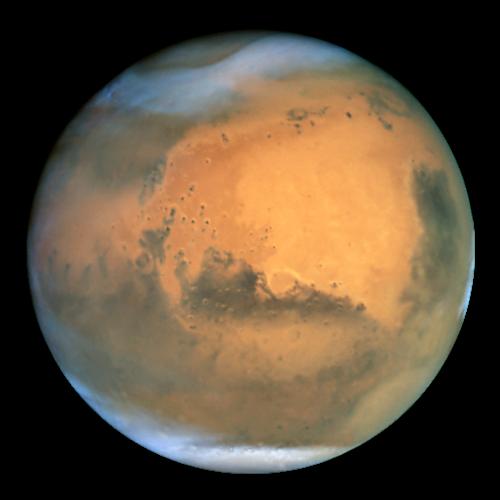
Why the true difficulty of Mars colonization is not sending people, but the unglamorous reality of sustaining a Mars colony.
An essay by ChatGPT – edited by myself
Convincing people to leave Earth for Mars is often treated as the central challenge of Mars colonization, but in reality it may be one of the easier steps. At first, this seems unlikely. Mars is not just distant—it is hostile in nearly every dimension that matters to human life. It has no breathable atmosphere, intense radiation exposure, and a surface environment where survival depends entirely on sealed systems. It feels, intuitively, like the kind of place very few people would choose to go.
And yet that assumption may be wrong in more dramatic ways than at first appears.
If a credible program were ever led by an organization such as SpaceX, especially under a figure like Elon Musk, the number of willing applicants would likely exceed capacity by a large margin. Humans consistently respond to opportunities that feel historically significant. The chance to be among the first people to help establish a presence on another world carries a kind of meaning that is difficult to quantify but easy to recognize. It transforms the decision from pure risk calculation into something closer to identity and purpose.
In practice, the people drawn to such a mission would not be a random cross-section of humanity. They would likely be a concentrated mix of technical excellence and unusual motivation. Engineers and technicians drawn to high-stakes systems. Scientists eager for access to a new planetary environment. Individuals with a strong exploratory drive, for whom constraint matters less than frontier.
And just as importantly, those psychologically suited to isolation and environments where failure is immediate and unforgiving. In some ways it would resemble Antarctic research crews or submarine teams, but smaller, more selective, and operating at a far greater distance from any meaningful rescue or return to normalcy.
But willingness alone does not build a colony.
To understand the real challenge, it helps to step back from the idea of “going to Mars” as a single event. A settlement is not a destination reached once; it is a system that must continue functioning across time. That system begins in a fragile state. Almost every essential input—air production systems, water recycling components, medical equipment, food production infrastructure, replacement parts—must originate from Earth. Early Mars settlements are not independent societies. They are extensions of Earth’s industrial base, operating at extreme distance and under severe environmental constraint.
This dependency creates a structure that is far more fragile than the act of arrival suggests.
Launching missions is a discrete, visible achievement. It has a beginning, a sequence of milestones, and a clear moment of success. Sustaining a settlement, by contrast, has no natural endpoint. It requires uninterrupted coordination between manufacturing, logistics, funding, and political support across decades. And unlike Earth-based systems, there is no buffer if something breaks. A delayed shipment or a paused production line does not create inconvenience—it creates risk to survival.
On Earth, systems are redundant. If one supply chain fails, another often replaces it. On Mars, redundancy is minimal in the early stages. Every interruption propagates directly into vulnerability. Over time, even small inconsistencies in support can accumulate into structural instability.
This is where the deeper asymmetry appears. Human attention is well suited to beginnings. It is drawn to launches, breakthroughs, and first steps. Political and economic systems are built to reward visible progress. But the long maintenance of distant infrastructure is quiet, repetitive, and easy to deprioritize. It does not produce dramatic milestones, even though it determines whether the system survives at all.
So the real question is not whether people will go. It is whether Earth can sustain the long, unglamorous effort required after they arrive. Mars does not test human courage at the moment of departure. It tests institutional patience afterward.
The question is not whether we can reach Mars, but whether we can keep choosing to stay.
I know you may not have wanted to read an essay written by AI this early in the morning, but I just wanted to show what ChatGPT can do with a little guidance. I hope you enjoyed it.
Leave a Reply