
• Eisenhower's Columbine III - a Lockheed VC-121A Constellation

    The Purpose of Pizza Delivery

    I’ve been struggling a little lately with my current choice of profession: software developer/web developer. With the advent of AI and other technologies in our modern world it is becoming increasingly difficult to find a job which is not being encroached upon by technology.

    Pizza delivery guys from established pizza places are being out-run by Uber drivers with delivery at a short price on shorter notice. Surfers are creating their own apps to find surf spots using new AI vibe coding software. Photographers are being overshadowed by AI image generation software that is getting very good.

    In my own profession as a self-taught software developer I find myself being driven out of a job by AI agents that are very very good at writing high-quality code from end-to-end.

    Starting my own Business

    I’ve recently started my own business doing web design when a client called me asking me to create a website. Now I’m beginning to wonder if it was a mistake to get into this field, which is heavily influenced by online AI website services which can do a very good job.

    There’s certainly a lot of disruption going on in this world caused by software we used to think would be amazing back at the turn of the millennium. Now it just seems to take our jobs.

    When my last client called me to seek my services, I actually pointed out these AI-driven options to him, but he simply told me “I guess I’m kind of old-fashioned”. And I believe there are a lot of clients out there who would express this sentiment and would rather work with a real human being when looking to create a new website or other product.

    An interesting parallel

    Today when I was browsing Youtube, I ran across a video of a Lockheed Constellation VC-121A airliner, the Bataan, that had been owned by Douglas MacArthur during the war and was painstakingly restored to working condition with a fully revamped interior.

    The airplane has an odd feature in that it doesn’t use a computer to monitor the state of the engines during flight but is run using fully manual control by an engineer who describes himself as a perpetual “gearhead”. Each part of the engine’s performance is regulated and monitored during flight by this engineer.

    The video made me think afterwards, “Wow, what an engineer, to understand each part and idiosyncrasy of those old engines and still do a good job of it”. I think that there is a certain beauty and excellence in simply doing some things yourself rather than letting the computer do it.

    This is something I think the older generation gets this better than our young generation of millennials and gen-Zers who seem to simply live naturally in the world of digital computers.

    This engineer from the video is to me, not a proof that computers can’t do the job better and might replace him, and do the job better at least in modern aircraft, but is a sign that some things were not meant for the hands of robots. After all, what is the purpose of life, except to serve in a way that your gifts are utilized to serve others in the most helpful way possible?

    There is a beauty in the man that can tune an engine to the optimal working power, simply by hand, using intuition, his ears, and long experience to achieve a compelling purpose.

    Thesis of Purpose

    If we don’t find purpose in our work, then we have failed as a people. I see young people all over not understanding who they are, when serving others in a useful role is the highest aim they can achieve.

    How, you may ask, is serving others the highest aim you can achieve? Consider the roles of a Mother and a pizza delivery man in society.

    Though these roles may seem humble they achieve a lasting purpose. The Mother or Father raises a child who understands who they are and their place in society. The pizza delivery man offers a valuable service that the Mother can appreciate when she simply doesn’t have time to cook a good dinner for her children. Every part benefits the whole.

    Remember, Jesus said that he who would become the greatest must become the servant of all – even as he was.

    How this Affects Software Development

    How does this apply to software developers? While AI may eclipse the software developers who gave birth to it at some point decades or even centuries into the future, AI wouldn’t have a wink of a chance of existing without them.

    What I can say is that software development is a respected profession that will continue long into the future, though it may look different than it used to be.

    I know that current software development is leaning heavily on AI tools because it can greatly boost productivity. We may even see AI agents totally replacing human developers, but we have not arrived there yet.

    How does this affect me?

    What I want to stress is that there is a usefulness to your work that others may appreciate in ways they or you may not realize. So keep learning to create websites, keep cooking those delicious pizzas, keep raising purpose-conscious kids. You may be rewarded in ways you do not realize.

    In fact, even if AI completely takes over the software development field in a few decades and no programmers are strictly needed, the very life skills I’m learning by starting a business and providing a highly skilled service will keep me in good stead if all my clients go to AI solutions.

    So I don’t view software development as a dead-end path at this point. It is simply a way to serve others and gain valuable life skills that apply to other areas of life you might never think were connected.

    And I’m going to keep looking for new ways to use my coding skills. Because life skills like meticulous design and patient effort will always be useful in one way or another.


    Timothy Grindall is a technology writer and self-taught computer programmer, photographer, filmmaker, thinker, and writer who wants to see the world change for the better.
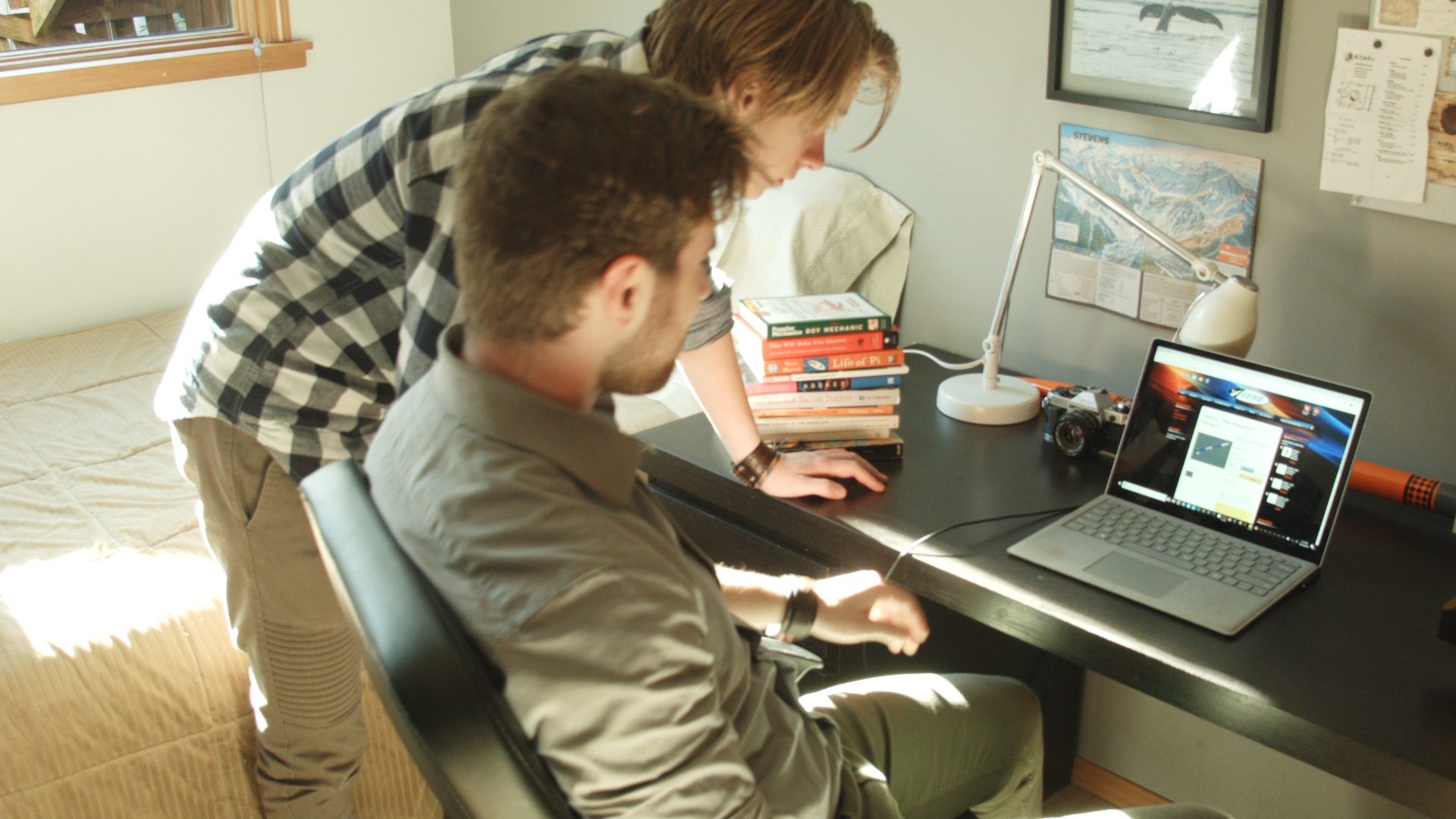
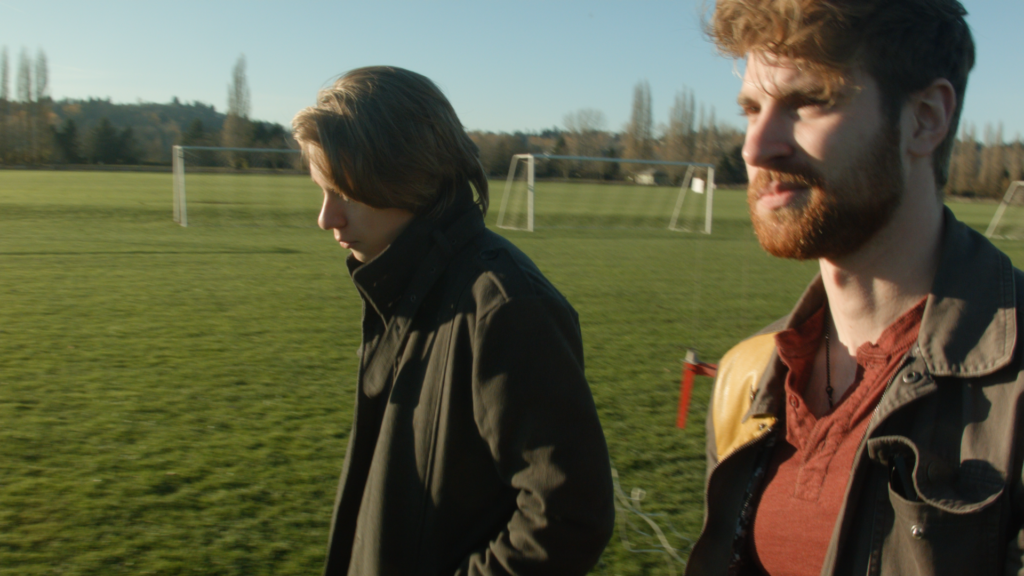
  • The two brothers bend over their laptop in the film, The Super Rocket

    The Story of The Super Rocket

    Or How God Gave me the Gift of a Story that I Would Actually Want to Tell

    The story of my film The Super Rocket begins as a simple idea in my head to write a story about two brothers who would reflect my own relationship with my younger brother. I remember sitting down one day with the intent to dream big and brainstorming some different ideas that would work as a short film I could shoot on a small budget.

    When I sat down, literally the first idea in my head was the idea for The Super Rocket was this story of two brothers, which may seem amazing, but I believe was an idea from The Holy Spirit himself. I’ll get into why I believe that later. But I didn’t like this idea very much at the time despite it’s authentic appeal and simple premise: Two brothers have a relationship fallout over a rocket.

    But I thought the idea was too simple and not grand enough for my taste, so I moved on to another idea which I called “Panspermia on the Starways” and was going to be a Sci-fi Western set in space and the tarmac and buildings of Area 51. Don’t ask me how I was going to film it. I was mainly focused on my screenwriting career at that point I think, because I think my ambition to shoot this film slowly died as I kept working on writing that script.

    Daniel and Caleb Blanchet in the last scene of the film, The Super Rocket
    Daniel and Caleb Blanchet in the last scene of the film

    I say “kept working” on writing, because it was hard to make myself actually come up with description and dialogue to write. I could make myself actually sit down, but the description and dialogue came slowly. I think mainly this was a case of writing a genre I didn’t understand and trying to flesh out a world that I had no experience with (spaceships and military bases).

    But I did learn from that project, and learned specifically that I was not prepared for this script in a way I didn’t fully understand. And I learned how to write dialogue and how to write description, and how to format a screenplay.

    Eventually I gave up on the project and one day as I was walking through the living room of my parent’s house thinking about this, I heard a small voice in my mind say: “Why don’t you try The Super Rocket?” It took me about a minute to realize the Holy Spirit had just spoken to me. Don’t ask me how I knew it was Him. Maybe it was the wisdom in his words.

    And so I began to write The Super Rocket again, page by page, and one line of dialogue at a time. I think the large amount of time I spent writing the project was part of why the story and dialogue works. I was a bit underdeveloped socially speaking at the time. Not that I was totally incapable, but I didn’t have many friends, and I wasn’t very talkative as a person.

    But by writing dialogue I learned how it worked – What worked well and what sounded totally fake. I distinctly remember coming to the final confrontation scene and having massive doubts as to my ability to write it, and simply choosing to believe that God had created me to be able to write – and therefore I wrote. I really surprised myself there, writing that scene, and because of my ability to believe in myself and who God had created me to be, I was able to overcome. I even had new ideas for the scene that really helped the story progress and develop.

    And that’s how we overcome folks, by believing what God says about us and by acting according to our true nature in Christ. The Bible says it this way: “You shall know the truth, and the truth shall set you free”.

    The brothers making detailed changes to the fins of Super Rocket
    The brothers making detailed changes to the fins of the Super Rocket

    And so the Super Rocket became a script and then became a movie. But the route to reach that end was not necessarily a direct route. I can’t tell the whole story here as there’s a lot of details, but I’ll tell part at least.

    My journey to find my actors was pretty short to say the least. I had the intention to find someone at my church but had no idea who that would be. But I went to church one day with the intention to search, and somehow I just saw the two Blanchet brothers interacting with each other and decided they had the perfect brotherly harmony I was looking for. It was like the Holy Spirit just pointed them out to me.

    I approached both of them individually and asked “Would you be interested in acting in my movie?” (I’m not sure of the exact words). Both immediately said yes, and I promised to send working scripts to their emails.

    My Mom was my producer on the film and somehow we were able to work out schedules and transportation for everything to work. And they were the perfect actors for the roles. Exactly what I had envisioned somehow, right down to the blonde hair on the younger one, dark hair on the older one. But the important part was the personalities of the two brothers.

    I also had help from the president of the local rocket club, Bernard Cawley, who helped us with lots of rocket related stuff including locations and launching the rockets. Without him, this film would not have been possible.

    One thing I have found when creating this film was that I made some rookie mistakes, such as using the first or second take because it seemed “good enough” but might have really been the result of low expectations for a first film. But a first film doesn’t have to be garbage, and I have seen some pretty good first films.

    Looking at the film today, I suddenly had the insight that if I had just waited for a few more takes the film would have been so much better. But we all learn at some point and that was a point in my life where I still had a few lessons to learn I hadn’t learned yet.

    But the Lord blessed this film in many ways, and though maybe my directing wasn’t the best on this film at all times, I think it’s still a gem of a film the Holy Spirit helped me in many ways to make. You can watch the nine-minute YouTube release of the film (2019) below:


    Timothy Grindall is a technology writer and self-taught computer programmer, photographer, filmmaker, thinker, and writer who wants to see the world change for the better.

  • Close up shot on a server rack with drives showing

    On Vibe Coding

    And the Surprising Potential of Having Computers Write Their Own Code

    Not too long ago, I started on a journey with “vibe coding” when I was innocently asking my AI assistant Claude if it would be feasible to write an in-ear AI assistant than ran on local hardware and emulated Jarvis from Iron Man (the movie starring Robert Downey Junior). It was an idea for an AI assistant that I had years ago before the advent of LLMs that had been acutely interested in, but totally unable to implement. Now I wondered if I could accomplish it.

    I asked Claude, innocently:

    How much work would it take to create a “Jarvis” in your ear earpiece that connects to a home server and acts as a web search assistant using voice commands?

    Claude gamely replied that the effort would be substantial but very doable, then asked:

    Want me to sketch out actual starter code you could run this weekend?

    And so it began. I’m now on version 1.1 (over 60 revisions later) of the project and though it’s morphed a little bit from its aspirational beginnings, it’s still some amazing software, written entirely by Claude. It runs a local LLM from Google running through Ollama on my laptop to which I can give typed text commands, or more fun – voice commands through a bluetooth headset. It’s actually pretty smart too.

    Usually I let Claude do the programming because it actually understands the code, and even if I did understand the code, Claude is so much faster.

    Might I add I haven’t paid for a Pro subscription this whole time? I use the artificial limits of a free subscription to help me maintain a coding/life balance.

    This makes me wonder: Is this the future of computer programming? Where we delegate coding and technical skills in the digital world to AI?

    Starting a Project vs Finishing it

    I recently happened on a video by Sara Dietschy (Rhymes with Peachy) on Youtube where she details the vibe coding process she used to arrive at a finished project with the help of Claude Code running in Cursor.

    She originally started building her project using v0.app but switched to Claude Code when her app broke halfway through the process because whatever AI model she had been using was not up to the process of debugging her app (Probably an Opus 4.8 model actually).

    But when she finally involved Claude Code it was able to immediately spot her problem for her which had actually been simply missing API keys which had been corrupted.

    Now Sara is not a coder: In fact she is a CS dropout who has – according to herself – forgotten most of what she knew about programming. That being said, she has some technical ability in my estimation.

    This technical ability is what makes or breaks the difference between being able to start a project and being able to finish it with modern tools right now. And Sara found this out first hand when she didn’t simply give up and instead switched to a tool she knew was more powerful.

    Where This is Heading

    But I believe the time is coming when semi-technical people like Sara will be able to create full products and software projects without ever touching any code at all, simply by leveraging the use of AI tools like Claude Code or V0.

    Now in my case with my Jarvis project, I found that I was actually able to understand most of what Claude was telling me because I have a coding background, not all users are going to have this context. This makes it a lot easier to guide the model doing the actual coding.

    Eventually however, AI apps will be able to handle the whole process on their own without human intervention even. And it’s not that far away.

    Is this something to welcome, or something to worry about?

    The real question is: Is this a good thing, or something that we want to avert? I’m currently pursuing a career in software development and was initially alarmed not too long ago that super-capable AI models would push me out of my chosen career.

    But I’m not so worried about that anymore as I can see with my new experience with “vibe coding” that there will always be a place for a human in the loop. And even for applications where humans get pushed out of the loop. There’s always something else to put your focus on. After all, humans created AI in the first place.

    In fact, I have found the simple act of telling Claude what to do to be refreshing in and of itself. Seeing a program or project come to life in a very short time can be a genuinely compelling reason for letting the AI agent take the wheel sometimes. But that’s my opinion.

    Fear is the mind-killer to quote Frank Herbert. You really have to trust God at some point to escape existential dread. But I digress.

    I recently wrote a sci-fi story titled Where the Light Shines in which humans live in a dystopian future where highly intelligent machines run everything and exist in sealed off rooms where they fully maintain themselves in every way (though they’re simply referred to as the daemons by the vulgate).

    In this story the machines are described as somewhat under-equipped to fully take over human tasks and do a good job.

    “Turns out super-intelligent computers couldn’t fix what happens when systems grow too large for anyone to be responsible for them anymore.

    But that was largely narrative worldbuilding at work – I didn’t really have an opinion one way or another at the time.

    Takeaway

    If automation has mostly displaced the work we didn’t want to do anyway, and often done it better — what exactly are we afraid AI is going to take next, and is it the technology we should be worried about, or our own fear of it?

    In my opinion, fear is usually the enemy, not the savior.


    Note: If you’re interested in checking out the app I built, you can see the code for the script on my github page, under the new name Friday.


    Timothy Grindall is a technology writer and self-taught computer programmer, photographer, filmmaker, thinker, and writer who wants to see the world change for the better.

  • Scaling Back in the Age of AI Dominance

    When AI becomes a goal in and of itself

    As I’ve been studying AI systems and writing posts about them, it has occurred to me that we may be creating more of a dependence on AI and LLMs than we may actually find desirable in the future. AI shows up everywhere from the search results Google gives you to the answering machine assistant I ran into when applying for a job recently. Companies like Microsoft, Amazon, and Google are racing to build huge datacenters to serve to the sudden demand for AI solutions. Elon Musk is even suggesting we put AI compute in space.

    With the advent of digital smartphones and personal computers which allow access at a moments notice to any social media app you can think of, we already know that overdependence on technology can be a mistake. Social media addiction is no joke. And while AI dependence doesn’t look exactly the same, it has obvious and more subtle similarities.

    I have found that while writing blog posts I will often turn to my trusty Claude assistant for advice and information such as fact checking my writing. Which is fine, but there is also the temptation to just let Claude do the writing for you, which is a first-class mistake when trying to teach yourself how to write. Because of my dependence on AI as a writing companion, I may be missing out on valuable learning opportunities. The process of making mistakes helps you to learn.

    An interesting thought

    If we can become over dependent on AI as a solution, we can just as easily become blind to its pitfalls – and the pitfalls may be bigger than most people realize. Consider this: what if someone along the way happened to discover a new algorithm that enabled AI models to run on a memory footprint that was a factor of ten times smaller than what’s required today?

    This is actually a possible situation, theoretically speaking, because many current LLMs are trained on less data than their size could optimally use – meaning the number of parameters is much larger than is strictly necessary for the given dataset 1. The actual reason current LLMs are created this way is because it has been found that simply increasing the model size helps the model perform better on the same data. There seems to be a definite relationship between model size and response quality.

    Which raises the question: why? If the reason behind the performance advantage could be fully understood, we may be able to reverse engineer the mechanism and invent an algorithm that uses smaller models with the same performance per training data. If this scenario actually happens, we will find the crazy datacenter buildout may have been a magnitude of ten too ambitious.

    This simply brings up the thought that maybe we’re trying too hard to build something that won’t even be necessary in the future. Now if the big tech companies do discover a new algorithm like this, they may be able to take advantage of their buildout to simply run bigger, better models, and maybe recoup their investment partially. But they would have still invested billions of dollars into something that they wouldn’t even have a sure market for.

    If the biggest players in tech can get carried away chasing the next big thing, it’s worth asking whether you might be doing the same thing — just on a smaller and less obvious scale. Technology can be genuinely empowering, but it can also get away from you — social media being the obvious example.

    Nature vs the Machine

    Recently my family was able to go on a camping trip in a nice spot and enjoy nature in a way that the smartphone in your pocket just can’t do. We got rained on a little, but stayed dry, and it was a great trip. I even got some great photos of the kids, using my 35mm film camera.

    But my point now is, technology is great for solving problems that cannot usually be solved any other way. Email is one of my favorite technologies, and helps me to stay up to date with important things all the time. But sometimes technology seems to become an end in itself, which I believe is a fatal mistake. I’m always happy to go outside and view the sunset or enjoy the breeze on my skin. Nature does something so well that technology cannot replicate very well at all, in terms of a sensory experience.

    And this is my fear about AI dominance in our current world. I love using AI as a coding and writing companion and for looking up things I used to Google (I do miss Google a bit), but if a technology becomes an end in and of itself and takes over other parts of your life that have greater value, you have a problem. While it would be great to see a little more patience on the part of tech companies big and small, it may ultimately come down to a choice for the end user – you and me. The insatiable drive for more in this world is truly amazing to me sometimes.

    Flip Phones

    I recently was inspired by my brother and another friend of mine who both dumped their smartphones for a flip phone (to different degrees). It’s actually an idea I have had myself before two years ago. And so just a couple months back, I ditched my smartphone and got a handy little flip phone for a very good price, and I have been enjoying the change very much.

    I had already had very good self-control with using my smartphone, but if you’re going to ignore the twitter app on your phone, why do you have the thing in the first place? So I went old-school in a way, with no regrets so far, amazingly enough. I love my little flip phone.

    I don’t think this solution is right for everybody, and I know some people won’t understand the idea at all even, but the simpler life has an attraction sometimes. My only advice for you is that you use wisdom and intelligence when dealing with AI in your life. Sometimes it’s better to move slow.


    Notes:

    1 For a deeper exploration of balanced scaling, see DeepMind’s 2022 Chinchilla paper. They demonstrated that a 70B model trained on 1.4 trillion tokens outperformed significantly larger models (like Gopher) on the same compute budget, while being much cheaper to serve and easier to deploy. Training Compute-Optimal Large Language Models (PDF)


    Timothy Grindall is a technology writer and self-taught computer programmer, photographer, filmmaker, thinker, and writer who wants to see the world change for the better.
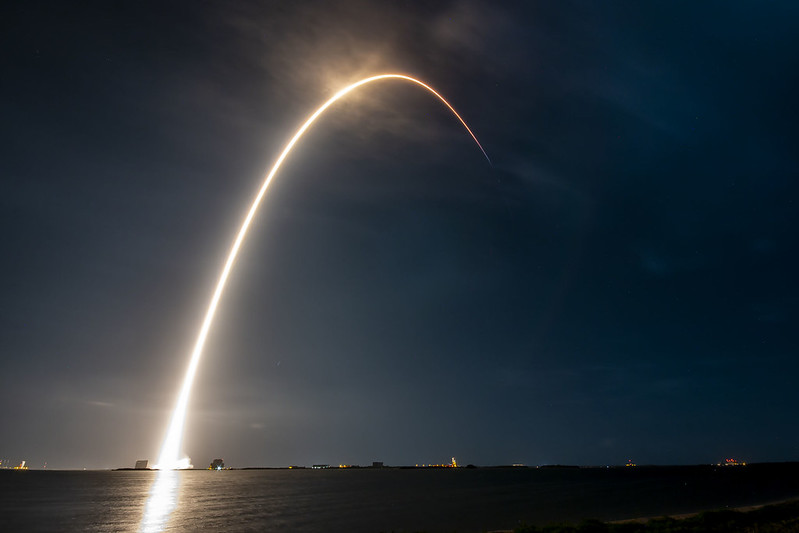
  • Light arc made by a falcon 9 rocket as it heads for space, for the Intelsat IS-40e Mission

    Starship Is a Solution Looking for a Problem

    I sometimes wonder if Elon Musk’s obsession with making humans an interplanetary species is a little too radical and not enough balanced. Despite having written a blog post recently praising SpaceX for bringing space excitement to the masses again, I still have my doubts about the long-term utility and reasonableness of the Starship vehicle. Is this investment being made by SpaceX a logical end-goal, or is it an overstep, in terms of having a working business model?

    This is actually something I’ve been thinking about for a long time, and I bet a lot of people actually share my opinion. SpaceX has always somehow found customers for its current Falcon 9 rocket, and has even partially made its investment back on the technology by launching its Starlink constellation. But Elon’s vision to send people to Mars is really a very ambitious plan.

    Does the Math Work?

    Elon is currently talking about putting millions of tons to orbit using the new Starship rocket. And he actually does have a business case that may work: launching AI satellites to orbit that effectively puts datacenters in space where they get free power, cooling, and have plenty of space to grow without cutting down precious trees (however, see this very interesting article by SemiAnalysis for some highly educating numbers). But beyond that I have not heard of any businesses wanting to put even a fraction of that much mass in orbit. Amazon, Microsoft, Google, are all racing to build terrestrial datacenters which are based on proven technology.

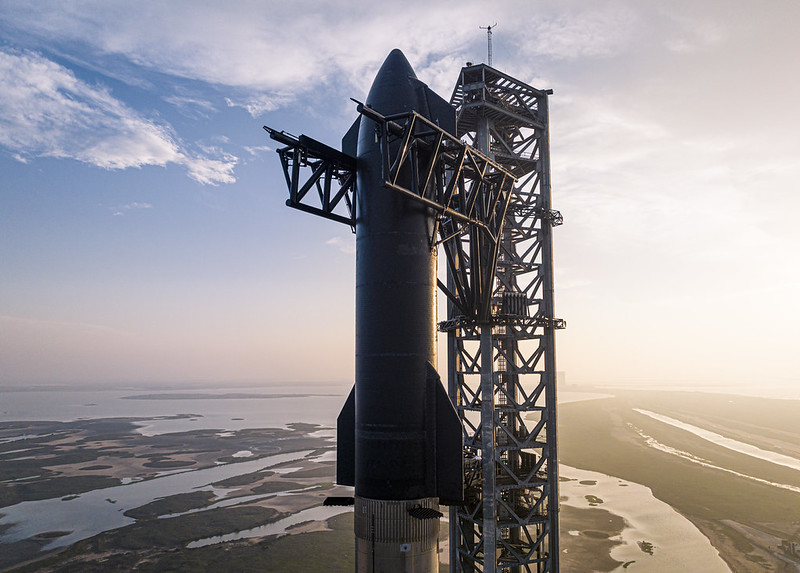
    Starship Test Flight Mission by Official SpaceX Photos, used under CC BY-NC 2.0

    SpaceX does have a great track record building infrastructure ahead of time and then finding the customers afterward as in the case of the Falcon 9 rocket. They did find there actually was a market for their rocket. And then the Starlink satellite idea came along, and Elon made good on a business model that didn’t make sense before from a cost standpoint. But the Starship basically has no business model yet as I have seen outside AI compute.

    Elon Musk has been unusually honest so far at simply stating that the Starship is really about going to the Moon and Mars. And the ship is very well suited for doing just that – moving millions of tons to orbit which is the first step to sending it to another planet. But there are other questions to answer.

    The Harder Questions

    One thing I have to point out about Musk is that he is very good at convincing a lot of people to get on his mission, and success has many friends, but I wonder if he has overestimated humankind’s ability to convince ourselves we should move to the moon or Mars as a permanent situation. And there are far more problems to be solved than just building giant reusable rockets to take us there. You also have to overcome radiation issues, isolation/confinement issues, and infrastructure, and supply chain issues.

    Everything you need to build a colony has to come from Earth to start with. If your intention was to simply build a small colony or “beachhead” on Mars, then it becomes a feasible mission, and you could be forgiven for arguing for that. But if you want to build a self-sustaining colony you have a long time to wait. Maybe even generations.

    A More Conservative Path

    My personal intuition if I were musk would not be to create a giant expensive rocket ship but simply to build on his falcon 9 business and make that rocket fully reusable. More launches would be needed to explore such technologies such as orbital compute, but the cost savings on infrastructure expansion would be worth it. Yes, you would need more small-rocket infrastructure, but you would still have the ability to fall back on a proven business model.

    Starship is an all-in bet on a future that hasn’t materialized yet. A fully reusable Falcon 9 would have been the more conservative path — preserving existing markets while incrementally exploring new ones. Orbital compute satellites don’t need to be enormous, and smaller payloads launched on proven hardware would allow SpaceX to develop the technology without betting the infrastructure on demand that doesn’t yet exist.

    To wrap things up, I hope Elon has a backup plan if Starship finds no customers. If not, he’ll need to be creative — finding markets, customers, and applications that don’t yet exist. I hope he can do that.


    Timothy Grindall is a technology writer and self-taught computer programmer, photographer, filmmaker, thinker, and writer who wants to see the world change for the better.
    This article was written with help from Claude.ai.

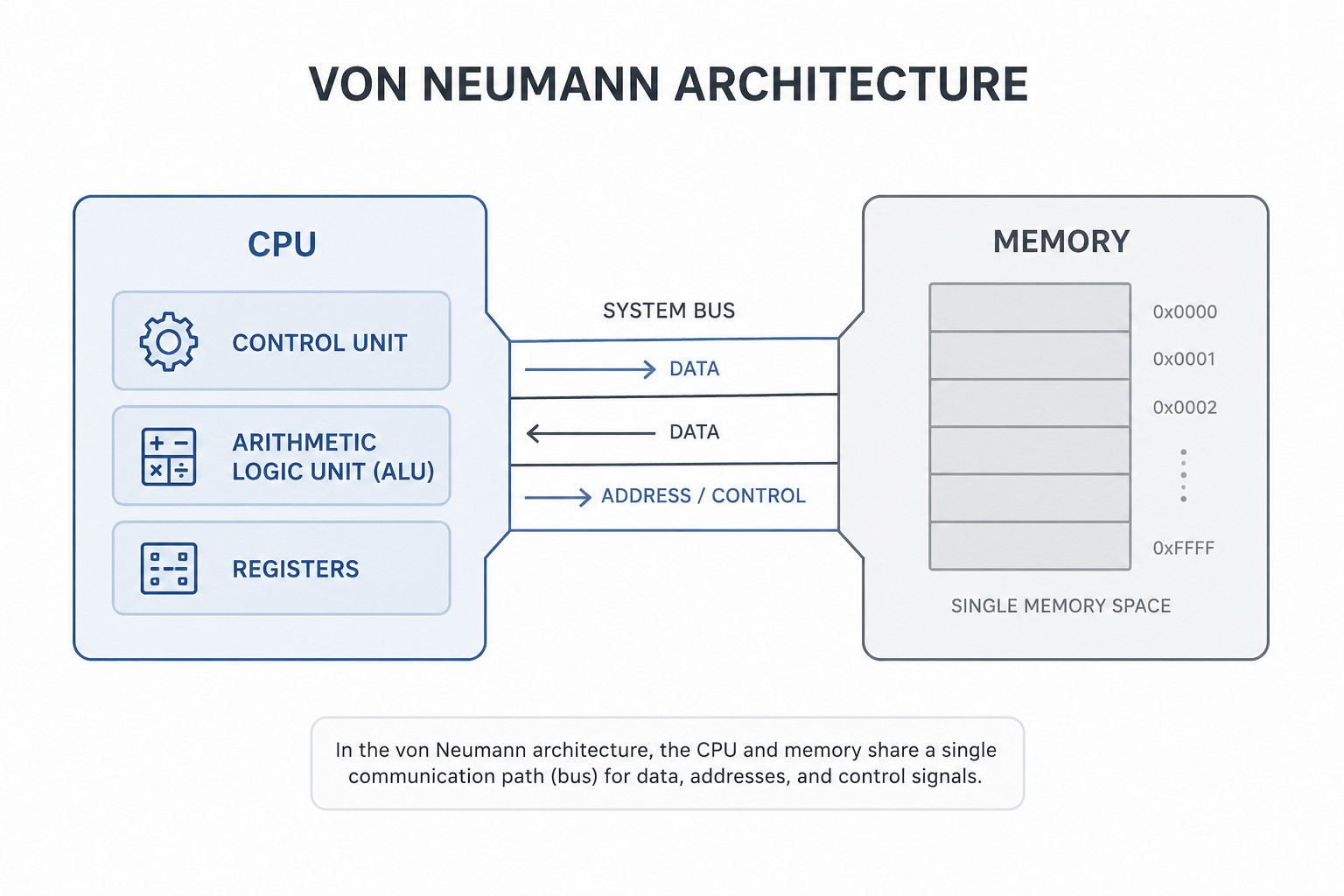
  • Diagram of Von-Neumann architecture

    The Wrong Architecture for the Right Reasons

    How a purist solution may not be the answer to inventing true machine intelligence.

    My interest in machine intelligence has long been shaped by texts like Jeff Hawkins’ On Intelligence (2004). I used to hold the view that achieving truly intelligent machines required building systems that mirrored the human brain down to the deepest computational details—that only “pure” neural net technology could suffice. But recently, a counter-thought has begun to take shape: perhaps technological compatibility is more important than biological fidelity in the pursuit of better machine intelligence algorithms.

    The problem lies in our current computer architecture choices. Von Neumann architecture separates processing and memory with a relatively slow bus that is the result of legacy computer design which utilizes storage that was inherently much slower than the processor. With the development of (relatively) cheap RAM this problem partially goes away, but is still inherent in the design.

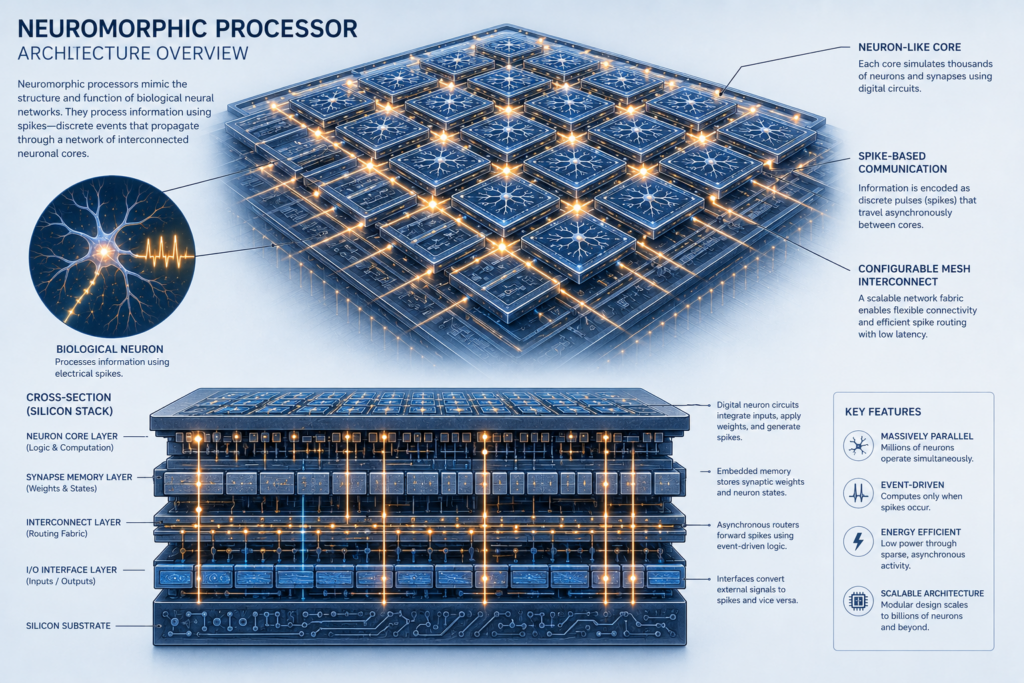
    Neuromorphic computing

    I am personally very interested in developing architectures where the processing and memory are co-located and highly intertwined. Something with the parallelism of a GPU but with neuron-like specialization at each node specifically made for the application of neural networks and natural language processing. Perhaps Intel’s neuromorphic chips will pioneer the way, or IBM’s NorthPole chip.

    Conceptual illustration of a neuromorphic processor architecture generated with AI assistance.

    What Large Language Models do RIght

    What I have begun to learn, is that modern Large Language Models are actually very efficient at utilizing current computer architecture in a way I hadn’t anticipated. In fact, the Transformer technology they use in particular, is custom made for running quick inference on GPUs and were a major breakthrough for machine learning research. This technology was spearheaded by a team of researchers at Google, who published their findings in the landmark 2017 paper Attention Is All You Need.

    While today’s LLMs do not closely follow the design of the human brain like that envisioned by myself and Jeff Hawkins and others, they are able leverage the hardware in a way that a more pure solution would simply not be able to. This may be superior to models that closely follow the brain in a way I haven’t envisioned, and lead to better intelligent machines.

    Historical Architecture Decisions

    While presenting the earlier draft of this article to Claude.ai it pointed out an interesting insight I hadn’t seen.

    This is the part I find most interesting. You’re essentially arguing that intelligence isn’t substrate-independent in a naive way — that a given computational paradigm and a given hardware architecture co-evolve and constrain each other. Transformers happen to map extremely well onto GPU/TPU parallelism (matrix multiplications, all the way down).

    A more biologically faithful architecture might be algorithmically superior in some abstract sense and still lose because it doesn’t leverage the hardware ecosystem we’ve spent 70 years optimizing.

    This is what I find most interesting. The the hardware we have now is limited by Von Neumann memory bottlenecks. It is what we have had to work with so far and has deeply influenced our software design. In a matter of fact, the two are actually inextricable.

    History actually supports this. The brain-inspired connectionist approaches of the 80s partly lost ground to symbolic AI not because they were wrong but because the hardware wasn’t there yet. Then deep learning “won” in the 2010s partly because GPUs happened to be perfect for it — almost accidentally, since GPUs were built for gaming.

    It’s remarkable that a category of hardware designed for gaming and 3D graphics became the cornerstone of machine learning and our understanding of how to leverage existing hardware. Perhaps God is in the details sometimes.

    When you write a piece of software you are bound to the hardware you’re working with – you can’t just dream pie-in-the-sky dreams. And conversely, when you design hardware, engineers are often constrained to make the hardware backwards compatible with existing codebases. Of course, abstraction layers like virtual machines and operating systems can shield software from the underlying hardware — but even these are ultimately running on physical silicon with real constraints.

    A New Thought

    This has led to a new thought for me: maybe we don’t have to follow the design of the brain so closely and can instead rely on iterative improvement to come up with a superior design that effectively leverages the underlying hardware. The brain is one solution to the problem of intelligence — but it may not be the only one, and it may not be the best one for silicon. Designing around the hardware we have, rather than reverse-engineering biology, could open doors we haven’t thought to look for yet.

    The brain’s design differs greatly from current silicon — it is relatively slow and remarkably power-efficient, yet it still runs on electrical impulses in a way that echoes semiconductor design. It is also built for a very specific purpose: a hierarchical, sparse-distributed memory system that handles both high-order thought and fine-grained memory detail exceptionally well. This architecture is amazing but does not reflect current computer architecture well.

    I think maybe if modern computer hardware was more parallel by design and had memory that was co-located, we might be able to even rival the design of the human brain someday in certain applications. Such designs might be able to work right alongside current Von Neumann silicon. But that is only a thought for now.

    Conclusion

    The idea that intelligence isn’t substrate-independent perfectly captures what I’ve been grappling with, and it has propelled my understanding of machine learning forward. And perhaps we will be able to build better intelligent machines because of it. Both the opportunity to build better traditional sequential algorithms and brain inspired network algorithms exists.

    I always appreciate when a new insight like this emerges and gives me something to think about.


    Timothy Grindall is a technology writer and self-taught computer programmer, photographer, filmmaker, thinker, and writer who wants to see the world change for the better.
    This article is a rewrite of an earlier, rougher draft. With help from the Gemma 4 LLM running on my laptop and some assistance from Claude, I reworked it into something clearer and more satisfying.

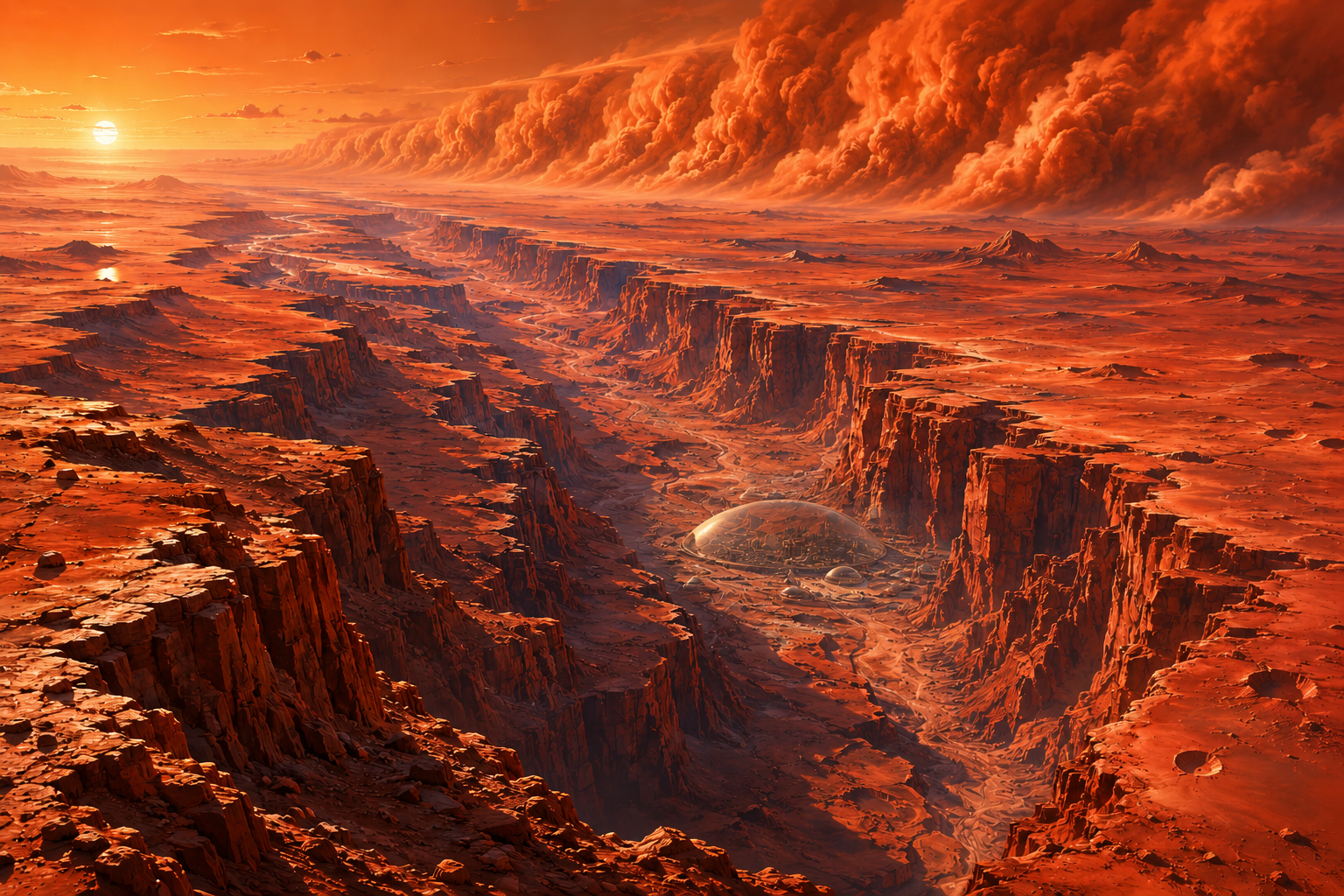
  • Valles Marineras with glass domed settlement and Dust Storm rising in the distance

    On Going to Mars

    I was reminded today of a series of ideas I had about the possible colonization of Mars, by watching the Livestream today by Everyday Astronaut (Tim Dodd). SpaceX led by Elon Musk almost flew their 12 flight of the Starship rocket today (V3). I’ve always loved watching rocket launches, and even though they had to scrub the mission because of some technical issues with the propellant loading system, it was exciting as ever. SpaceX has brought enthusiasm about space back to the masses again, becoming the biggest player in the space race today.

    And the space race is no longer about beating the Soviets, instead it seems to involve partnering with them, even. Maybe it’s more a culture, to outdo ourselves, in the race to the stars.

    Which brings me back to Mars. I can really only speak from personal experience as I’ve rarely heard anyone else express this out loud, but I think it rings true with many of us: I used to believe that since God had designed Earth to sustain life, earth was where life God intended it to stay. In other words, since God commanded humankind in Genesis to multiply and fill the earth and subdue it, it was wrong to extend ourselves outside Earth’s sphere. And there may be some truth to that, but my beliefs have changed on that.

    Anyone who had seen the, yes very expensive, but admittedly successful mission we call the International Space Station which is, barely still inside Earth’s domain. We are no longer bound to the surface of Terra Firma as we used to be. Planes routinely outdistance the birds in the sky, and orbiting satellites have been and continue to be a vital part of the lifeblood of technological society. It seems God continues to bless our efforts to reach for the stars.

    Will it stay this way? That is a very good question.

    But let me back up. I told my Mom this morning that my views on living on an alien planet like Mars had changed recently – just slowly changed as I saw all the progress we have been making to reach foreign planets with Space X and Elon’s insatiable dream to colonize the red planet. But as I’ve noticed SpaceX continue to prosper I have, in the past, really wondered about the rate at which Elon was expending money, and resources (and people) to reach a rock which it may be hard to find large numbers of people to colonize.

    Is he being wise? Or impulsive? Musk is known for his radically different leadership and business style, famously once taking the majority of the money he had earned from PayPal at that time and sinking it into SpaceX, and splitting the rest between Tesla and Solar City – leaving him with very little personal spending money. It paid off for him that time, because he was able to overcome the technical challenges they were experiencing at SpaceX, but things were dicey for awhile.

    Image credit Nasa

    Musk is currently building a new Starfactory building to build and maintain up to 24 Starship rockets at one time. He hopes to achieve production of one Starship per day. Beyond just churning out new hardware, the Starfactory serves as the practical hub for SpaceX’s reusability goal. It’s the site where flight-proven boosters and ships are returned, refurbished, and prepped for their next journey—a necessary step if the goal is to eventually make space travel as routine as a commercial flight.

    And there’s a lot more to establishing a colony on mars than just building rockets.

    I’ve told my Mom a couple times this week that my views on spaceflight had changed, and that I might even now think of myself as the kind of person who would go to mars, to live there. What? Am I serious? Perhaps I’m not that serious as an individual, but it has made me think Elon’s dream may have a chance of changing my mind.

    One question remains: would God approve of my mission? I also told my Mom today, that really, the deciding factor on whether I went to Mars was what the Holy Spirit had to say about it. And while that’s not the only factor, I know that God had put an adventurous spirit in the heart of every man and woman who has ever been born. And maybe in some it burns bright enough to precipitate interstellar travel.

    But the real choice is actually a very hard one. I have been on 3 week trips by boat to Alaska up the Inside Passage a few times and know what its like to sleep 5 people to a small “camper”. Eventually, you just feel like you have to stretch your legs eventually. But in order to do that on Mars you would need a suit, and oxygen, and your time would be limited because of radiation exposure.

    But maybe it would be worth it. Maybe Elon’s dream can become a reality. Maybe the technical problems can be overcome. Maybe humankind can stop waging war on each other long enough to touch the sky.

    I wish I could be part of that grand adventure.

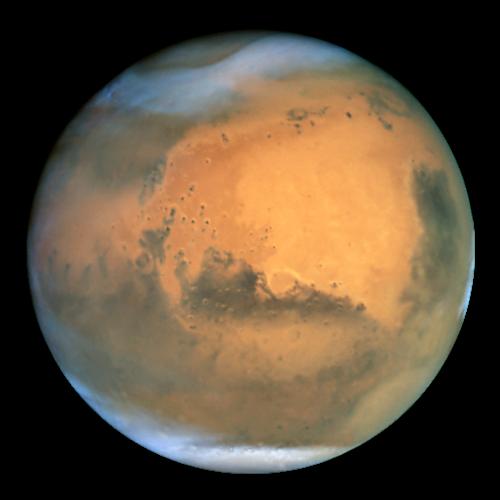
  • Mars from the view of the Hubble Telescope

    A Colony That Depends on Earth Forever

    Why the true difficulty of Mars colonization is not sending people, but the unglamorous reality of sustaining a Mars colony.

    An essay by ChatGPT – edited by myself

    Convincing people to leave Earth for Mars is often treated as the central challenge of Mars colonization, but in reality it may be one of the easier steps. At first, this seems unlikely. Mars is not just distant—it is hostile in nearly every dimension that matters to human life. It has no breathable atmosphere, intense radiation exposure, and a surface environment where survival depends entirely on sealed systems. It feels, intuitively, like the kind of place very few people would choose to go.

    And yet that assumption may be wrong in more dramatic ways than at first appears.

    If a credible program were ever led by an organization such as SpaceX, especially under a figure like Elon Musk, the number of willing applicants would likely exceed capacity by a large margin. Humans consistently respond to opportunities that feel historically significant. The chance to be among the first people to help establish a presence on another world carries a kind of meaning that is difficult to quantify but easy to recognize. It transforms the decision from pure risk calculation into something closer to identity and purpose.

    In practice, the people drawn to such a mission would not be a random cross-section of humanity. They would likely be a concentrated mix of technical excellence and unusual motivation. Engineers and technicians drawn to high-stakes systems. Scientists eager for access to a new planetary environment. Individuals with a strong exploratory drive, for whom constraint matters less than frontier.

    And just as importantly, those psychologically suited to isolation and environments where failure is immediate and unforgiving. In some ways it would resemble Antarctic research crews or submarine teams, but smaller, more selective, and operating at a far greater distance from any meaningful rescue or return to normalcy.

    But willingness alone does not build a colony.

    To understand the real challenge, it helps to step back from the idea of “going to Mars” as a single event. A settlement is not a destination reached once; it is a system that must continue functioning across time. That system begins in a fragile state. Almost every essential input—air production systems, water recycling components, medical equipment, food production infrastructure, replacement parts—must originate from Earth. Early Mars settlements are not independent societies. They are extensions of Earth’s industrial base, operating at extreme distance and under severe environmental constraint.

    This dependency creates a structure that is far more fragile than the act of arrival suggests.

    Launching missions is a discrete, visible achievement. It has a beginning, a sequence of milestones, and a clear moment of success. Sustaining a settlement, by contrast, has no natural endpoint. It requires uninterrupted coordination between manufacturing, logistics, funding, and political support across decades. And unlike Earth-based systems, there is no buffer if something breaks. A delayed shipment or a paused production line does not create inconvenience—it creates risk to survival.

    On Earth, systems are redundant. If one supply chain fails, another often replaces it. On Mars, redundancy is minimal in the early stages. Every interruption propagates directly into vulnerability. Over time, even small inconsistencies in support can accumulate into structural instability.

    This is where the deeper asymmetry appears. Human attention is well suited to beginnings. It is drawn to launches, breakthroughs, and first steps. Political and economic systems are built to reward visible progress. But the long maintenance of distant infrastructure is quiet, repetitive, and easy to deprioritize. It does not produce dramatic milestones, even though it determines whether the system survives at all.

    So the real question is not whether people will go. It is whether Earth can sustain the long, unglamorous effort required after they arrive. Mars does not test human courage at the moment of departure. It tests institutional patience afterward.

    The question is not whether we can reach Mars, but whether we can keep choosing to stay.

    I know you may not have wanted to read an essay written by AI this early in the morning, but I just wanted to show what ChatGPT can do with a little guidance. I hope you enjoyed it.

  • Book: On Intelligence

    Maybe ten years ago (2016 or earlier) I read a book authored by Jeff Hawkins with Sandra Blakeslee titled On Intelligence (2004) that changed my life. This book was the product of Jeff’s life-long quest to understand how the human brain works, and his more recent quest to apply it to machine intelligence.

    The book proposes a fundamentally different way of thinking about how the brain works which is centered on how the neocortex works. Jeff proposes that the basis of intelligence is in the “memory-prediction framework”. A concept he later calls the ‘cortical algorithm’, drawing on neuroscientist Vernon Mountcastle’s work.

    I could go on about how our neocortices work, but its been ten years since I read the book so I’ll leave that for another post. But Jeff argues in his book that intelligence is basically the ability to recognize objects and store models of those objects in our brain using what’s called sparse-distributed representations, and then make predictions about these objects and how they’ll change through time using those models based on what’s been seen before. This could be through touch, taste, smell, sight or hearing.

    Jeff recently did an interview with Jiemian News that has been posted in it’s original English version on the Numenta blog, which I highly recommend you read. In it he presents several very good arguments about why current deep learning technology is not the path to Artificial General Intelligence that some people think it is. Instead it is following the cortical algorithm given by our brains, that we will eventually be able to rival these marvelous biological constructions.

    I’ve come to believe that all intelligence may be founded on the simply principle of prediction. There may be many forms of intelligence, ranging from the very simple (Venus Fly Trap), to the very complex (the human brain), but all of them, including classic computer programming, follow the principle of prediction. Humans do this at an individual scale when working on their own, when alone, or at a mass scale when cooperating on a project, such as working in a factory or on a farm.

    When deciding if you want to go outside and take a walk for example, you have to make a prediction about whether it will rain or not. At a more complex (or perhaps philosophical) level you have to determine if it’s worth it to you. At every point along the way, you make a prediction about whether you will be successful, or whether you will have a peaceful relaxing walk, reaching your state of mind and body that is attractive to you.

    I could talk about the subject of discipline, or doing something that hurts a little more now, but is good for you in the long run, but that would be distracting perhaps. I had to make a prediction about whether you would want to read this article after I had written it. Really, everything comes down to predictions with intelligence like that presented in the human brain.

    Even ChatGPT has to make predictions, though Jeff argues that it does it in a fundamentally inferior way. To quote Jeff when asked if ChatGPT could be considered as achieving AGI:

    No. It is easy to be fooled into thinking that chatbots such as ChatGPT are intelligent like we are, but they are not. Chatbots only know the statistics of text. Human intelligence is based on moving about in the world, touching things, feeling textures, seeing what happens when we interact with the world, and conversing with our fellow humans. A chatbot can fool you into thinking it knows these things too, but in reality, it can only play back text based on what humans have written. Chatbots don’t understand the world as we do.

    Jeff is confident that the difference between chatbots that predict the next word and true intelligence is in the algorithm – and having a sufficiently good understanding of our brains’ architecture. I’m very hopeful that the technology at Numenta will be successful and actually implement true intelligence in binary ones and zeros, but I actually don’t believe consciousness and intelligence as the same thing.

    If you read the book of Genesis in the Bible you will see that when God created man he breathed “the breath of life” into him and created a being born of his own life and made in his image. In Hebrew this is called the nishmat chayyim (nish-MAHT khai-YEEM) in Hebrew or the “breath of life”. God literally took some dust on the ground, took the constituent molecules and atoms and formed it into a man. then he knelt down and breathed his own life into his nostrils. This was the first man and where the first woman came from.

    As such, I don’t believe machines will ever achieve consciousness and may even have a fundamentally different form of intelligence than humans because of their lack of a spirit or soul. Not necessarily in every way, but it may come up in surprising ways. For example, AI may never naturally feel a brotherly or even childlike mutual love for their human creators. They may not possess the same goals unless those goals are programmatically added ahead of time. I’m not saying AGI will be a danger to us, just that it might be very different.

    But the main reason I am writing this article is simply to bring to light the ideas that have been brought forward by Jeff Hawkins in his books and by the team at Numenta. His work is much less known than the work by say, Open AI and Anthropic, but proposes a model of intelligence that is fundamentally different that what we have seen before. I hope others take his approach and try to learn from biology.

  • 11 Technology Inventions and Ideas for a Better World

    This is simply a collection of ideas that have been rolling around in my head for awhile and needed to make it onto the page. Everything from self-learning computers that don’t go out of date, to a vision for ecological responsibility free from government enforced rules, to datacenters built in the desert to become free of the grid.

    1. Digital brains that self-grow like coral and organize. No formal training period as they learn in real-time, and consolidate periodically. Could be implemented with nano-bots working on a silicon substrate. Elegant and beautiful at the same time.
    2. Solar powered datacenters in the Nevada desert for AI and other compute tasks. Much easier to implement and maintain than datacenters in space or on the moon.
    3. Acapella music groups for children (that could even include guitar lessons, for example) provided by grassroots peer-organized parents and children.
    4. Mini-computers running social media, email, blogs and other services either on static IP addresses or running through DHCP interpretation, based out of homes. (Examples: Mastodon, Minecraft). No more SaaS.
    5. AI web assistant in your ear (Jarvis) that is running on a home server. Could be implemented pretty easy today using existing hardware and open AI models. No cloud, no subscription, no data leaving your house.
    6. How do you incentivize using recyclable or biodegradable products that don’t damage the environment or add to landfills? Incentivizing recyclable and biodegradable products through store-level reward programs, creative public education, and psychological research into how visible environmental damage shapes consumer behavior.
    7. Modern silicon chips designed in a non-Von-Neumann configuration for neural nets. The memory and processing are co-located rather than separated by a dramatically slower bus. Behavior emerges from the architecture itself — spike-based and event-driven — cutting out unnecessary software layers. [Loihi 2][Seeker]
    8. Computers designed to last centuries rather than decades, using solid-state memory and no moving parts. Sealed in a waterproof package that is non-biodegradable. Based on neuromorphic chips that are always learning and never go out of date.
    9. Bring back the flip phone – smartphones in a flip phone config with small screens that rely on voice commands and hot buttons.
    10. Smart-glasses that are provider agnostic, connect to a smartphone or laptop, and use small AI models for basic tasks. Eliminates subscription services and protects your privacy.
    11. Self-driving cars that are sandboxed/air-gapped from the internet. Greater peace of mind and security. Planes navigate without live internet — it’s a design choice, not a technical limitation