
A Unique theory in our day and age that explains intelligence in the human brain
I just started reading a book I’ve been wanting to read for about a year now, but didn’t have the excuse to buy with my tight budget. A Thousand Brains is Jeff Hawkins’ second book on his overarching theory of how the brain works. I read his first book years ago titled On Intelligence and it changed how I view intelligence, the human brain, and many aspects of our world.
It has even shaped how I view my own thought processes.
I’m only seven chapters in but it has not been hard to understand because I’ve already read his other book, and I’ve given this theory a lot of thought. Jeff does a very good job of putting everything in laymen’s terms.
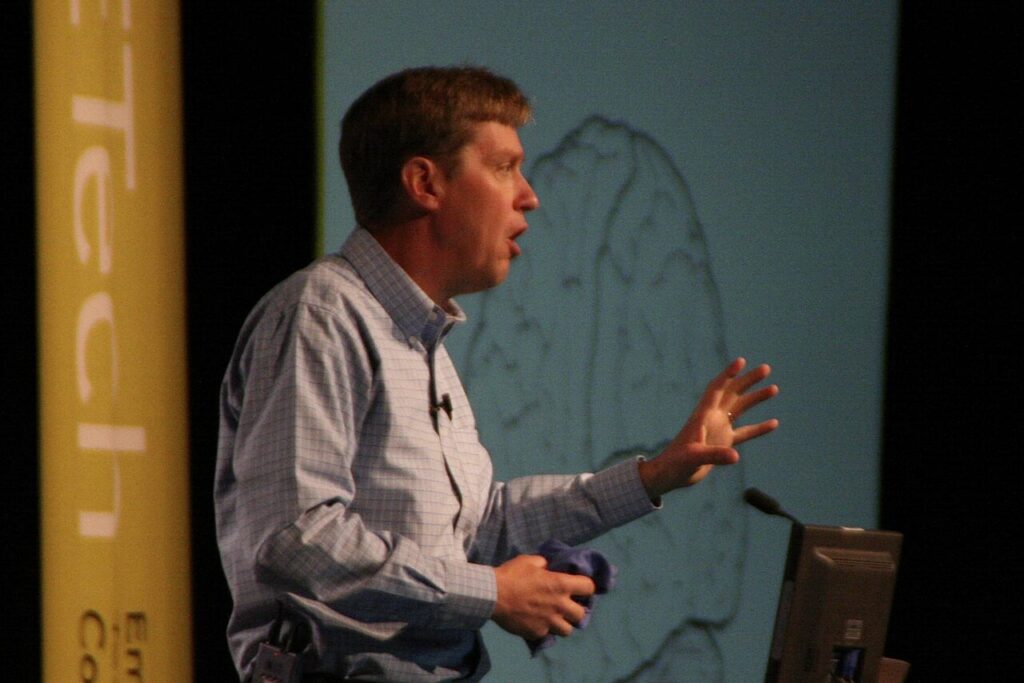
Hawkins founded the Redwood Neuroscience Institute in 2002 and then his private research company, Numenta later on when RNI moved to UC Berkeley. He published On Intelligence in 2004 before he had started Numenta in 2005.
The book A Thousand Brains lays out a pretty good theory of how the brain works at least at a basic level in just the first three chapters. He covers the ‘old’ brain versus the ‘new’ brain, how signals are propagated through the brain as a whole, and how the brain is connected before diving into what Vernon Mountcastle calls the “Cortical Algorithm”.
The next four chapters cover the principle of prediction, neuron design and predictive neuron spikes, mapping neurons, reference frames, and a lot of other things.
The theory presented in Hawkins’ books is something which seems to be totally new to the research space. Hawkins’ notes in the first chapter of A Thousand Brains that there has been no real overarching theory of how the human brain works developed, though there has been a deluge of research. It’s like a giant jigsaw puzzle with thousands of pieces, but no solution. Hawkins tries to remedy this problem with his theory.
I’m not going to bog you down with details, but Hawkins’ theory developed over 15 years centers on the study of the neocortex and has evolved over the years. Back in his first book he called the mechanism for his theory the Memory Prediction Framework, now he simply says the neocortex learns a model of the world and makes predictions based on that model.
His theory builds on Vernon Mountcastle’s work and centers on the neocortex. Mountcastle wrote an essay which was published in a book in 1978 titled The Mindful Brain. Hawkins read the essay in 1982 and the writing influenced him and his later theory profoundly.
Mountcastle believed there was a common “cortical algorithm” in the neocortex. That is, intelligence in the brain relied on a relatively simple mechanism that was repeated throughout the brain. Mountcastle didn’t know what the algorithm was specifically, but he could infer it was there by observing that all regions of the neocortex look similar regardless of where you look.
The neocortex in the human brain is divided into approximately 150,000 columns which all look the same and apparently perform the same function. These columns are furthermore divided into several hundred “minicolumns” each. Hawkins proposes that these columns all do the same thing.
He further corroborates this by pointing out that neuroPhoto: Ed Schipul, CC BY-SA 2.0, via Wikimedia Commonsplasticity in the human brain points to a common cortical algorithm. For example, when someone becomes blind through an accident the regions of the neocortex that previously handled vision can be retrained to handle hearing or touch.
That is only the beginning of the book so far, as I’ve only read about a third of the book, but I do understand his theory as outlined in his older book at a basic level.
Hawkins also is not shy to extend his theory to intelligent machines and Numenta is actively developing software based on his theory which shows promise. Hawkin’s team has also used software to model neuron behavior as it exists in the brain and run simulations to confirm his theory.
I personally think that a better understanding of the human brain must rely on a good working theory that meets all the constraints. Jeff Hawkins and his fellow researchers seems to have found a theory piece by piece and made good headway in constructing a complete theory.
I also think a better understanding of the human brain is essential to building electronic brains or even just machine intelligence. Let us not underestimate what AI can do for us in the future.
The common thread in intelligence is the principle of prediction, but the human brain shows true intelligence is far more complex than may appear at first. The human brain is really an amazing design. If you want to learn a real working theory behind how the brain works, this book is it.
You can read more about their project and find links to their videos and social accounts at the Thousand Brains Project website.
Timothy Grindall is a thinker, christian, lover of God and the Bible, and a bit of a polymath to be honest.
You can find a lot of articles on this blog meandering around a variety of topics, but mostly it’s a playground for me to learn to write. I hope you enjoyed it.
Leave a Reply