
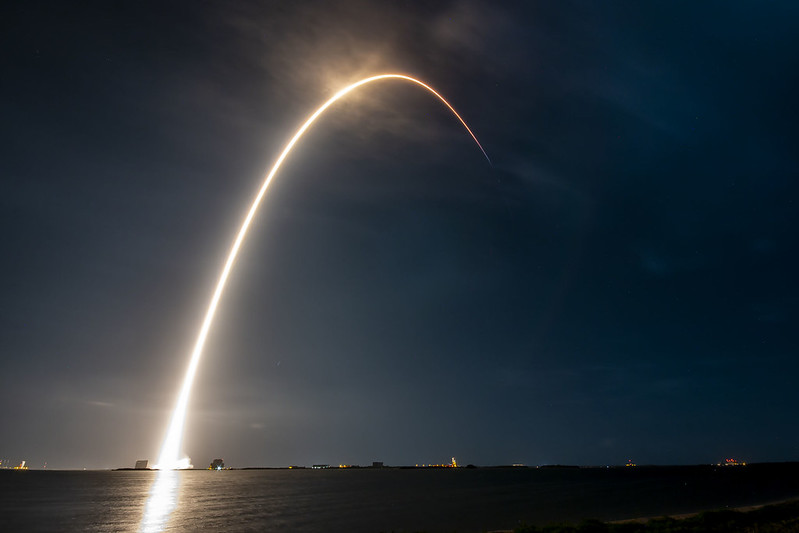
I sometimes wonder if Elon Musk’s obsession with making humans an interplanetary species is a little too radical and not enough balanced. Despite having written a blog post recently praising SpaceX for bringing space excitement to the masses again, I still have my doubts about the long-term utility and reasonableness of the Starship vehicle. Is this investment being made by SpaceX a logical end-goal, or is it an overstep, in terms of having a working business model?
This is actually something I’ve been thinking about for a long time, and I bet a lot of people actually share my opinion. SpaceX has always somehow found customers for its current Falcon 9 rocket, and has even partially made its investment back on the technology by launching its Starlink constellation. But Elon’s vision to send people to Mars is really a very ambitious plan.
Does the Math Work?
Elon is currently talking about putting millions of tons to orbit using the new Starship rocket. And he actually does have a business case that may work: launching AI satellites to orbit that effectively puts datacenters in space where they get free power, cooling, and have plenty of space to grow without cutting down precious trees (however, see this very interesting article by SemiAnalysis for some highly educating numbers). But beyond that I have not heard of any businesses wanting to put even a fraction of that much mass in orbit. Amazon, Microsoft, Google, are all racing to build terrestrial datacenters which are based on proven technology.
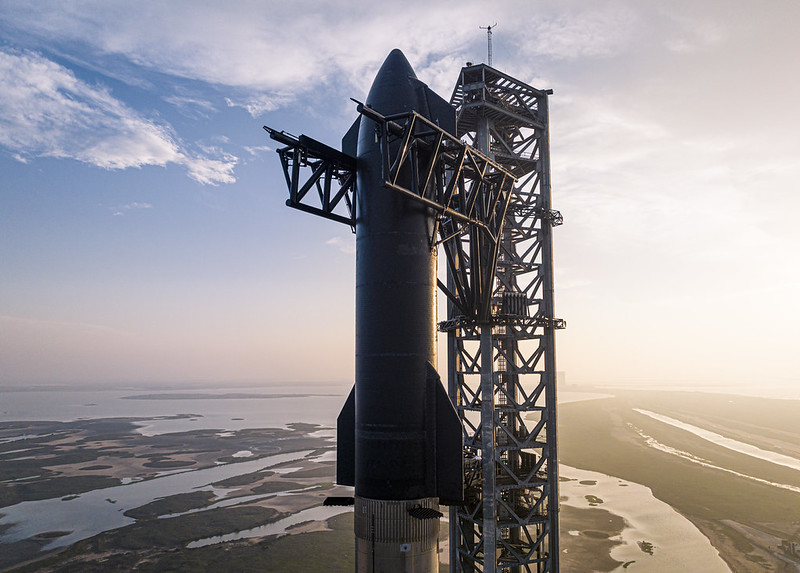
SpaceX does have a great track record building infrastructure ahead of time and then finding the customers afterward as in the case of the Falcon 9 rocket. They did find there actually was a market for their rocket. And then the Starlink satellite idea came along, and Elon made good on a business model that didn’t make sense before from a cost standpoint. But the Starship basically has no business model yet as I have seen outside AI compute.
Elon Musk has been unusually honest so far at simply stating that the Starship is really about going to the Moon and Mars. And the ship is very well suited for doing just that – moving millions of tons to orbit which is the first step to sending it to another planet. But there are other questions to answer.
The Harder Questions
One thing I have to point out about Musk is that he is very good at convincing a lot of people to get on his mission, and success has many friends, but I wonder if he has overestimated humankind’s ability to convince ourselves we should move to the moon or Mars as a permanent situation. And there are far more problems to be solved than just building giant reusable rockets to take us there. You also have to overcome radiation issues, isolation/confinement issues, and infrastructure, and supply chain issues.
Everything you need to build a colony has to come from Earth to start with. If your intention was to simply build a small colony or “beachhead” on Mars, then it becomes a feasible mission, and you could be forgiven for arguing for that. But if you want to build a self-sustaining colony you have a long time to wait. Maybe even generations.
A More Conservative Path
My personal intuition if I were musk would not be to create a giant expensive rocket ship but simply to build on his falcon 9 business and make that rocket fully reusable. More launches would be needed to explore such technologies such as orbital compute, but the cost savings on infrastructure expansion would be worth it. Yes, you would need more small-rocket infrastructure, but you would still have the ability to fall back on a proven business model.
Starship is an all-in bet on a future that hasn’t materialized yet. A fully reusable Falcon 9 would have been the more conservative path — preserving existing markets while incrementally exploring new ones. Orbital compute satellites don’t need to be enormous, and smaller payloads launched on proven hardware would allow SpaceX to develop the technology without betting the infrastructure on demand that doesn’t yet exist.
To wrap things up, I hope Elon has a backup plan if Starship finds no customers. If not, he’ll need to be creative — finding markets, customers, and applications that don’t yet exist. I hope he can do that.
Timothy Grindall is a technology writer and self-taught computer programmer, photographer, filmmaker, thinker, and writer who wants to see the world change for the better.
This article was written with help from Claude.ai.
Leave a Reply